
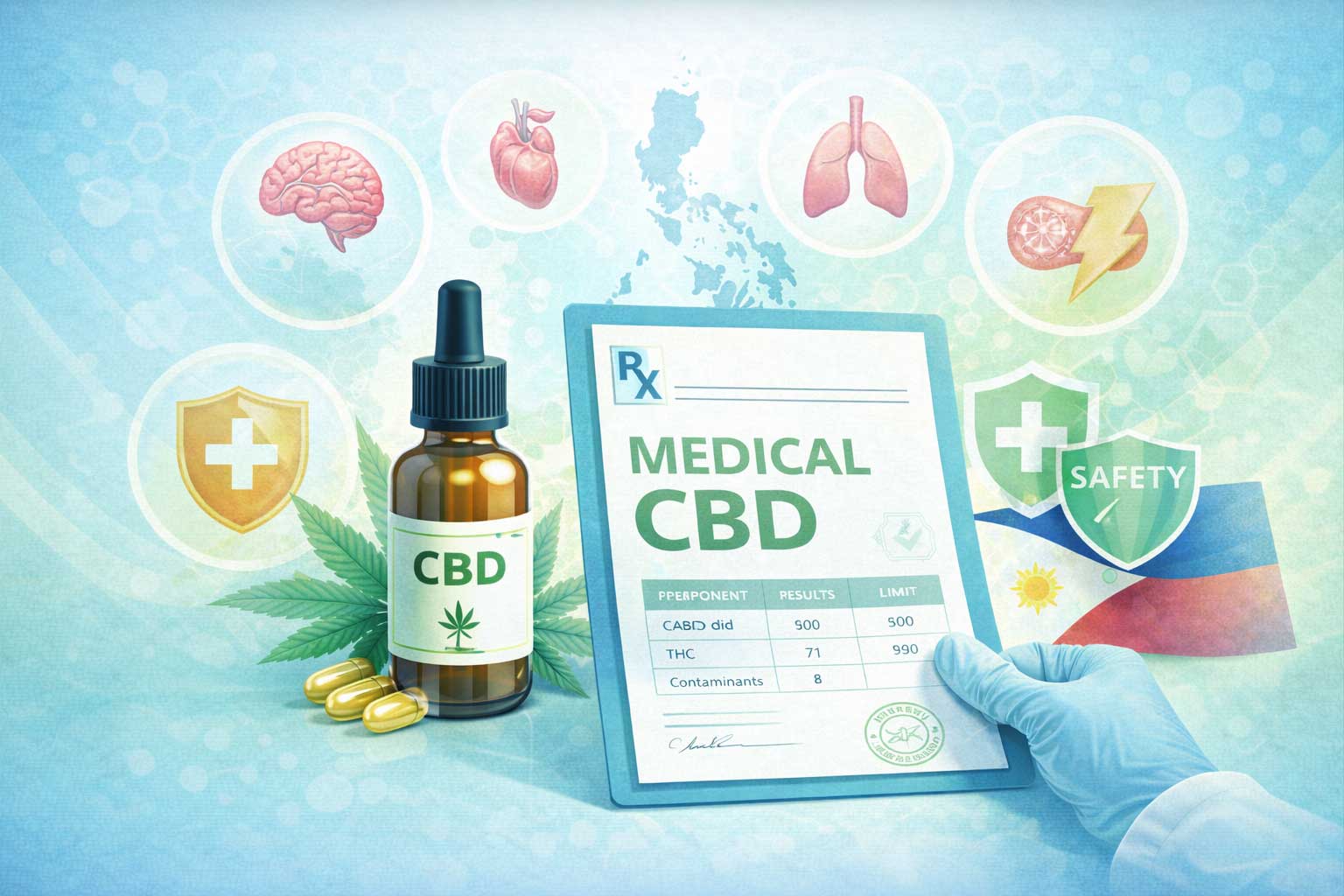
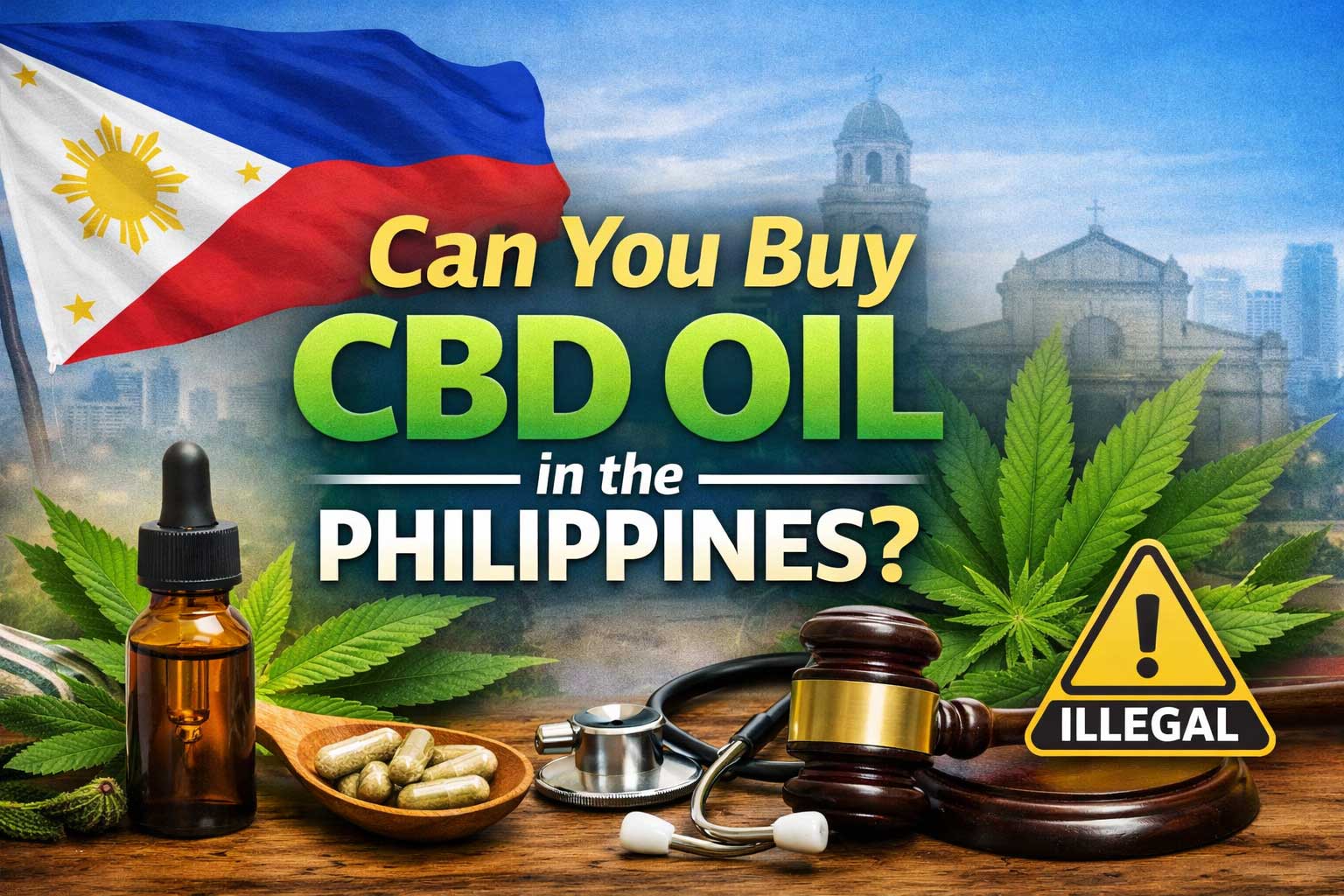
Medical CBD in the Philippines: Conditions, Safety & Doctor Guidance
Around the world, cannabidiol (CBD) is studied for its potential role in medical care.
In the Philippines, however, CBD remains a regulated substance and any medical access
must follow strict regulatory and professional oversight.
This article explains how CBD is discussed in medical contexts, why physician guidance
is essential, and what patients should understand before exploring regulated access.
What “Medical CBD” Means in the Philippine Context
In some countries, CBD is available as a wellness supplement.
In the Philippines, CBD is treated differently due to its origin from cannabis plants
and its classification under drug control frameworks.
“Medical CBD” in the Philippine context refers to:
- Physician-evaluated use
- Patient-specific consideration
- Regulatory approval through official pathways
- Ongoing medical supervision
Conditions Commonly Discussed in Public Medical Sources
International research and public medical discussions often reference CBD in relation to
specific conditions. These discussions do not guarantee effectiveness
and do not replace professional medical care.
- Severe or treatment-resistant epilepsy
- Neurological conditions involving muscle spasticity
- Chronic pain associated with serious illness
- Palliative or supportive care contexts
Any consideration of CBD for these conditions must be evaluated by a licensed physician
and approved through regulatory processes.
Why Doctor Guidance Is Essential
CBD can interact with other medications and may affect how certain drugs are metabolized.
This makes medical supervision critical.
A physician helps by:
- Reviewing medical history and current medications
- Evaluating potential risks and contraindications
- Determining whether regulated access is appropriate
- Monitoring patient response and safety
Safety Considerations Patients Should Know
Even when CBD is discussed for medical use, safety remains the priority.
Important considerations include:
- Potential drug interactions
- Variability in product quality
- Accurate dosing under supervision
- Clear documentation and traceability
Patients should never self-medicate or rely on unverified sources for medical guidance.
Why Dosage Advice Should Not Be Taken Online
CBD dosage varies widely depending on the individual, condition, product formulation,
and medical context.
For this reason, reputable medical resources avoid publishing universal dosage recommendations
and instead emphasize physician-led decision making.
Regulatory Pathway for Medical Consideration
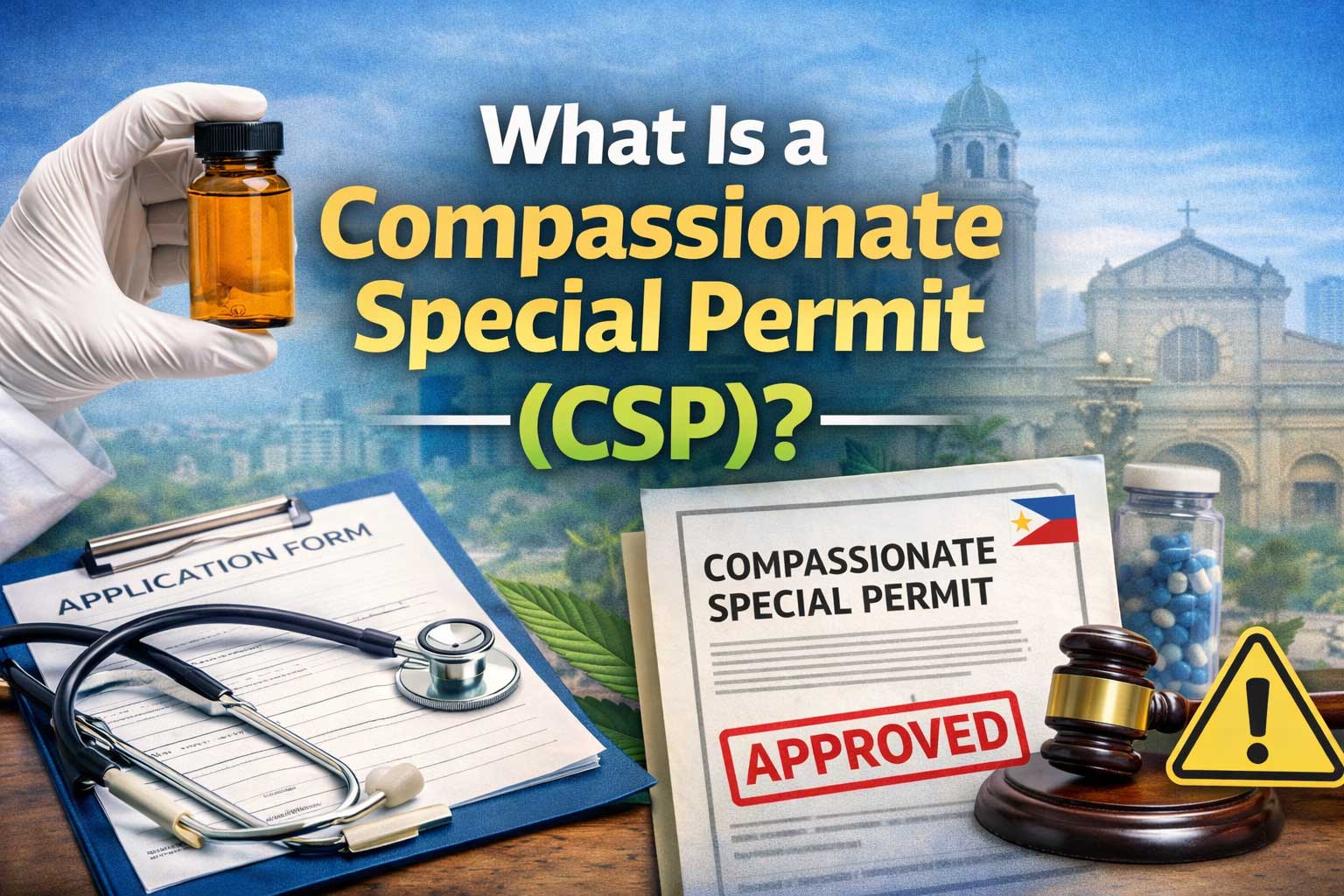
In the Philippines, medical access to CBD is typically considered through the
Compassionate Special Permit (CSP) process administered by the Philippine FDA.
This pathway ensures:
- Patient-specific evaluation
- Regulatory oversight
- Product documentation and safety review
Frequently Asked Questions
Is CBD approved as a medicine in the Philippines?
CBD is not approved as a general medicine or consumer product.
Restricted medical access may be considered through regulatory approval.
Can CBD replace prescribed medication?
No. Patients should never stop or replace prescribed medication without medical supervision.
Is CBD safe for everyone?
Safety depends on individual health factors, medications, and professional evaluation.
There is no one-size-fits-all answer.
Disclaimer: This article is for informational purposes only and does not constitute medical advice.
Always consult licensed physicians and follow Philippine laws and FDA regulations.
Last updated: January 2026

Leave A Comment