
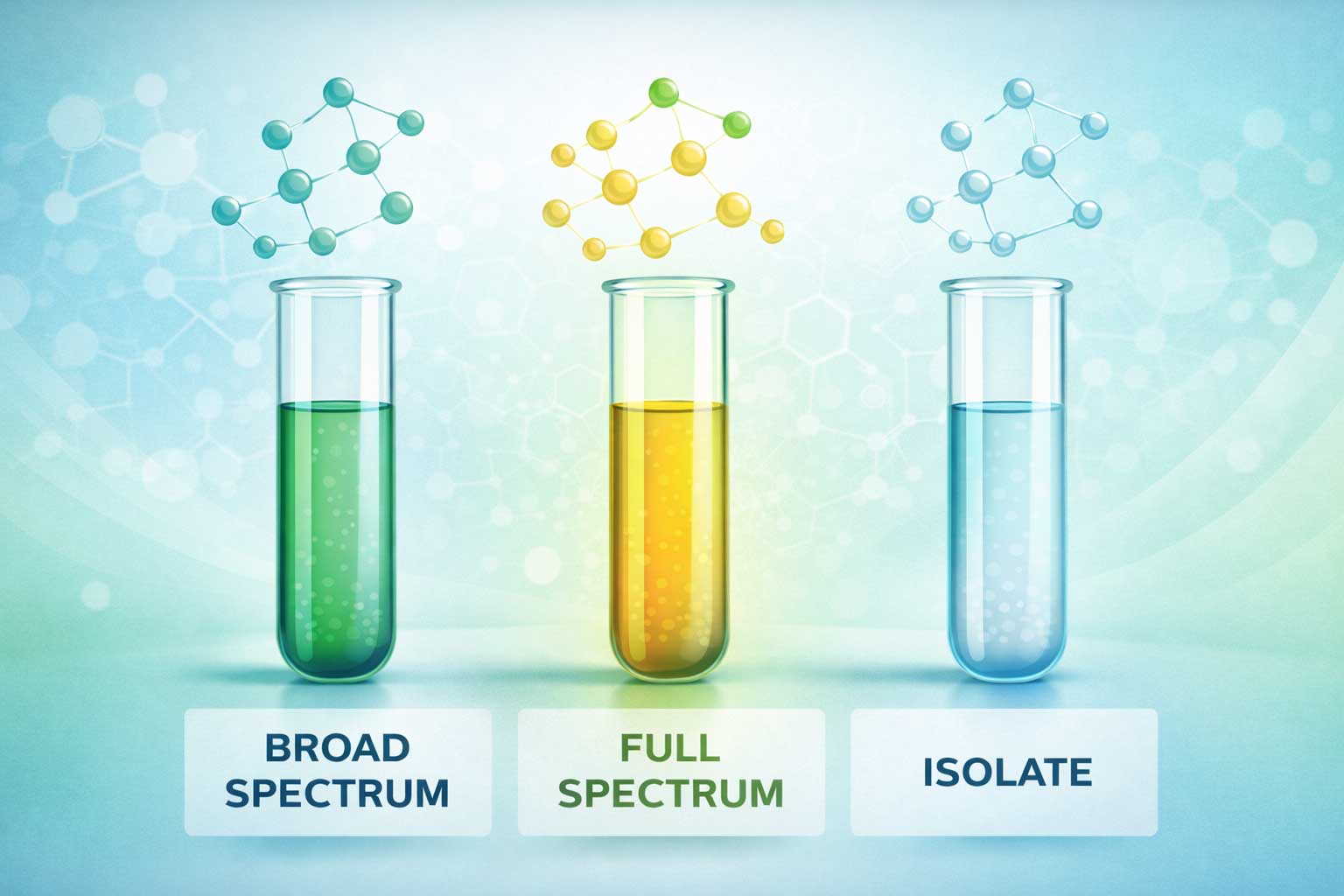
Broad Spectrum vs Full Spectrum vs CBD Isolate: What’s the Difference?
CBD products are often described as broad spectrum, full spectrum, or CBD isolate.
These terms can be confusing, especially in countries like the Philippines where cannabinoid regulation is strict.
This guide explains what each type means, how they differ, and why the distinction matters for safety and compliance.
Quick Overview
- Full spectrum: Contains CBD plus other cannabinoids, including trace THC
- Broad spectrum: Contains CBD and other cannabinoids, but no detectable THC
- CBD isolate: Pure CBD only, no other cannabinoids
What Is Full Spectrum CBD?
Full spectrum CBD products contain a range of naturally occurring cannabinoids from the cannabis or hemp plant.
This includes CBD as well as trace amounts of THC.
Because full spectrum products may contain THC, they are subject to the highest level of regulatory scrutiny.
In the Philippine context, the presence of THC — even in small amounts — is a significant compliance consideration.
What Is Broad Spectrum CBD?
Broad spectrum CBD is processed to remove detectable THC while retaining other cannabinoids and plant compounds.
Broad spectrum products are often discussed as a middle option between full spectrum and isolate,
but claims of “THC-free” should always be verified through laboratory testing.
What Is CBD Isolate?
CBD isolate is the most refined form of CBD.
It contains only cannabidiol, with all other cannabinoids and plant compounds removed.
Isolate products typically contain no THC, but this should still be confirmed with a
Certificate of Analysis (COA).
Side-by-Side Comparison
| Feature | Full Spectrum | Broad Spectrum | CBD Isolate |
|---|---|---|---|
| CBD | Yes | Yes | Yes |
| Other cannabinoids | Yes | Yes | No |
| THC presence | Possible (trace) | Removed / ND* | None |
| Regulatory risk (PH) | Highest | Lower (verify) | Lowest (verify) |
*ND = Non-detectable, based on lab testing limits.
Why Labels Alone Are Not Enough
Terms such as “THC-free” or “zero THC” are marketing claims and should not be relied on without verification.
The only reliable proof of cannabinoid content is a third-party Certificate of Analysis (COA).
Which Type Is Safest From a Compliance Perspective?
From a purely regulatory and documentation standpoint, products with clearly documented
non-detectable THC levels are generally considered lower risk.
However, regulatory interpretation depends on jurisdiction, use case, and official evaluation.
Frequently Asked Questions
Is full spectrum CBD legal in the Philippines?
Products containing THC are subject to strict regulation.
Any medical access must follow official approval pathways.
Does “broad spectrum” always mean THC-free?
Not always. Broad spectrum claims should be confirmed with a COA.
Is CBD isolate completely risk-free?
No product should be assumed compliant without proper documentation and regulatory review.
Disclaimer: This article is for informational purposes only and does not constitute medical or legal advice.
Always follow Philippine laws and consult licensed professionals when appropriate.
Last updated: January 2026


Leave A Comment