
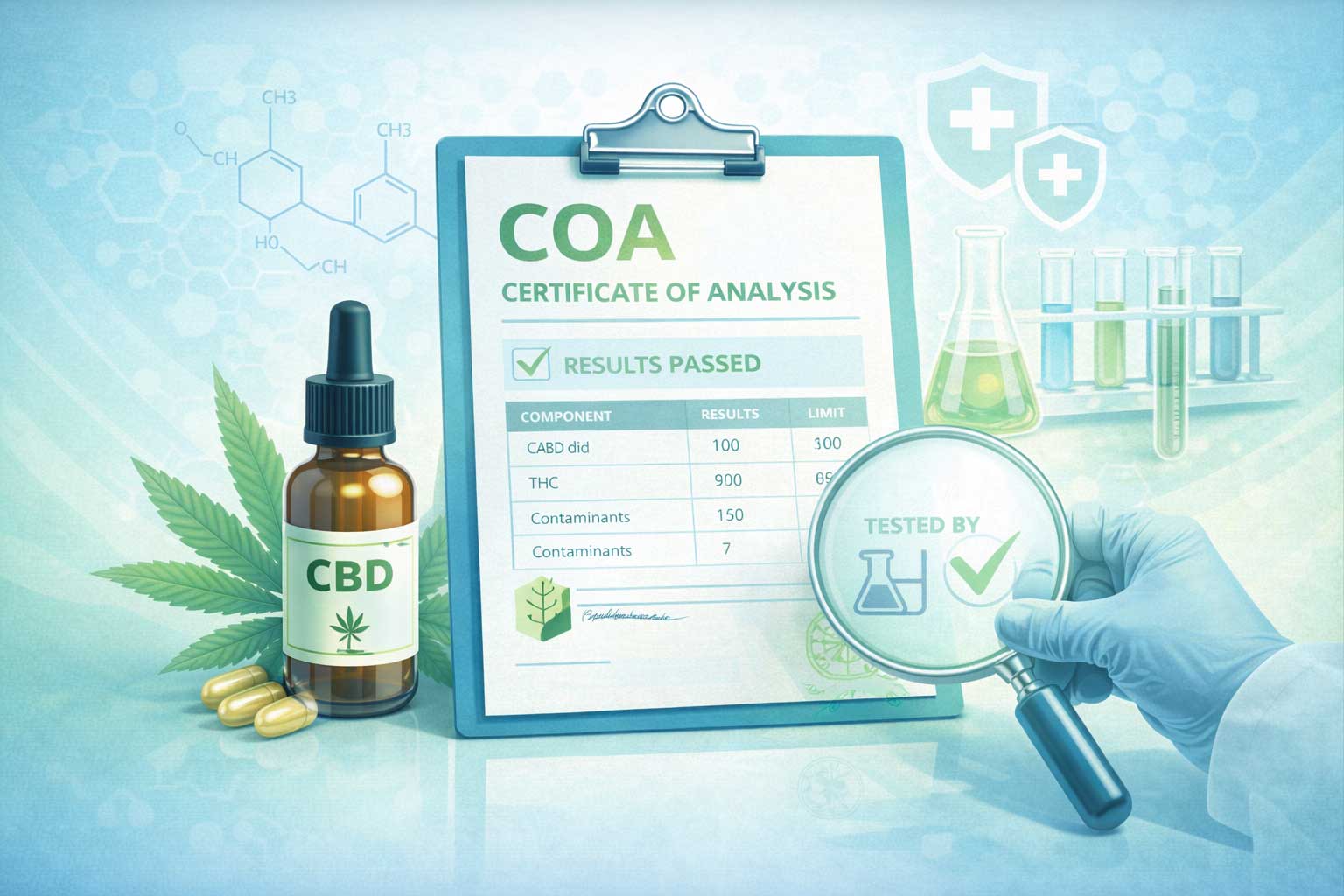
CBD Certificate of Analysis (COA): How to Read Lab Reports
A Certificate of Analysis (COA) is the most important document used to verify the contents and safety of a CBD product.
This guide explains what a COA is, what information it should contain, and how to spot red flags.
Understanding a COA is essential for patient safety, regulatory compliance, and informed decision-making.
What Is a Certificate of Analysis (COA)?
A Certificate of Analysis (COA) is a laboratory report issued by an independent, third-party testing facility.
It confirms the chemical composition and safety testing results of a specific product batch.
For CBD products, a COA verifies:
- Cannabinoid content (CBD, THC, and related compounds)
- Contaminant screening results
- Batch or lot identification
Why COAs Matter for CBD Products
Because CBD products may contain controlled substances such as THC,
regulators and medical professionals rely on COAs to assess compliance and safety.
A valid COA helps confirm that:
- The product contains the stated amount of CBD
- THC levels are clearly disclosed
- The product has been tested for harmful contaminants
Key Sections of a CBD COA
1. Product & Batch Information
The COA should clearly list the product name, batch or lot number, and testing date.
This information must match the label on the actual product.
2. Cannabinoid Profile
This section shows the concentration of cannabinoids, usually in milligrams (mg) or percentages.
- Total CBD content
- THC content (including delta-9 THC)
- Other cannabinoids (if present)
For Philippine compliance discussions, THC levels are especially important.
3. Contaminant Testing
A complete COA should include screening for:
- Heavy metals (lead, mercury, arsenic, cadmium)
- Pesticides
- Residual solvents
- Microbial contaminants (mold, bacteria)
Results are typically shown as “Pass” or “Fail” based on laboratory detection limits.
How to Match a COA to a Product
A COA is only valid if it corresponds to the exact product batch you are reviewing.
- Check that the batch number matches the label
- Confirm the testing date is recent
- Verify the laboratory name and accreditation
Common COA Red Flags
- No batch or lot number
- Missing THC data
- Only cannabinoid testing with no contaminant screening
- Undated or outdated reports
- In-house testing instead of third-party testing
COA vs Marketing Claims
Product descriptions and marketing language are not substitutes for laboratory verification.
Claims such as “THC-free” or “premium CBD” should always be supported by a COA.
Frequently Asked Questions
Is a COA legally required?
Requirements vary by jurisdiction and use case.
However, COAs are widely recognized as a best practice for safety and transparency.
Can a COA be reused for different products?
No. Each COA applies only to a specific batch of a specific product.
Is a QR code to a COA acceptable?
QR codes are commonly used, but the linked document must still meet all COA criteria.
Disclaimer: This article is for informational purposes only and does not constitute medical or legal advice.
Always consult licensed professionals and follow Philippine laws and regulatory guidance.
Last updated: January 2026

Leave A Comment