

Is CBD Oil Legal in the Philippines? (2026 Legal Update)
CBD oil is widely discussed as a non-intoxicating compound, but its legal status in the Philippines is often misunderstood.
This article explains how Philippine law currently treats CBD, what is allowed, and what remains restricted as of 2026.
This content is provided for educational purposes only and reflects the current regulatory framework.
Short Answer: Is CBD Oil Legal in the Philippines?
CBD oil is not legal for general over-the-counter sale in the Philippines.
Cannabis and its derivatives remain controlled substances under Philippine law.
However, a restricted medical pathway exists for certain CBD-containing drug products when approved through official regulatory processes.
Why CBD Is Regulated in the Philippines
Philippine drug policy focuses on controlling substances derived from cannabis, regardless of whether they cause intoxication.
While CBD does not produce a “high,” it is still regulated because it originates from the cannabis plant and may contain trace amounts of THC.
As a result, CBD products are evaluated as drug substances rather than wellness supplements.
DDB Classification and Schedule 4 Substances
Under frameworks issued by the Dangerous Drugs Board (DDB), certain medicines containing cannabidiol (CBD)
with extremely low THC content may be classified as Schedule 4 substances.
Schedule 4 substances are defined as having accepted medical use but are subject to strict regulation and prescription-only access.
This classification does not mean CBD is freely legal — it means it may be considered for medical use under controlled conditions.
Medical Use vs Over-the-Counter Sale
- Medical use: Possible only with proper approval and documentation
- OTC retail sale: Not recognized under current Philippine drug laws
- Online sales: Subject to the same restrictions as physical retail
Any CBD product marketed as a general wellness supplement should be approached with caution.
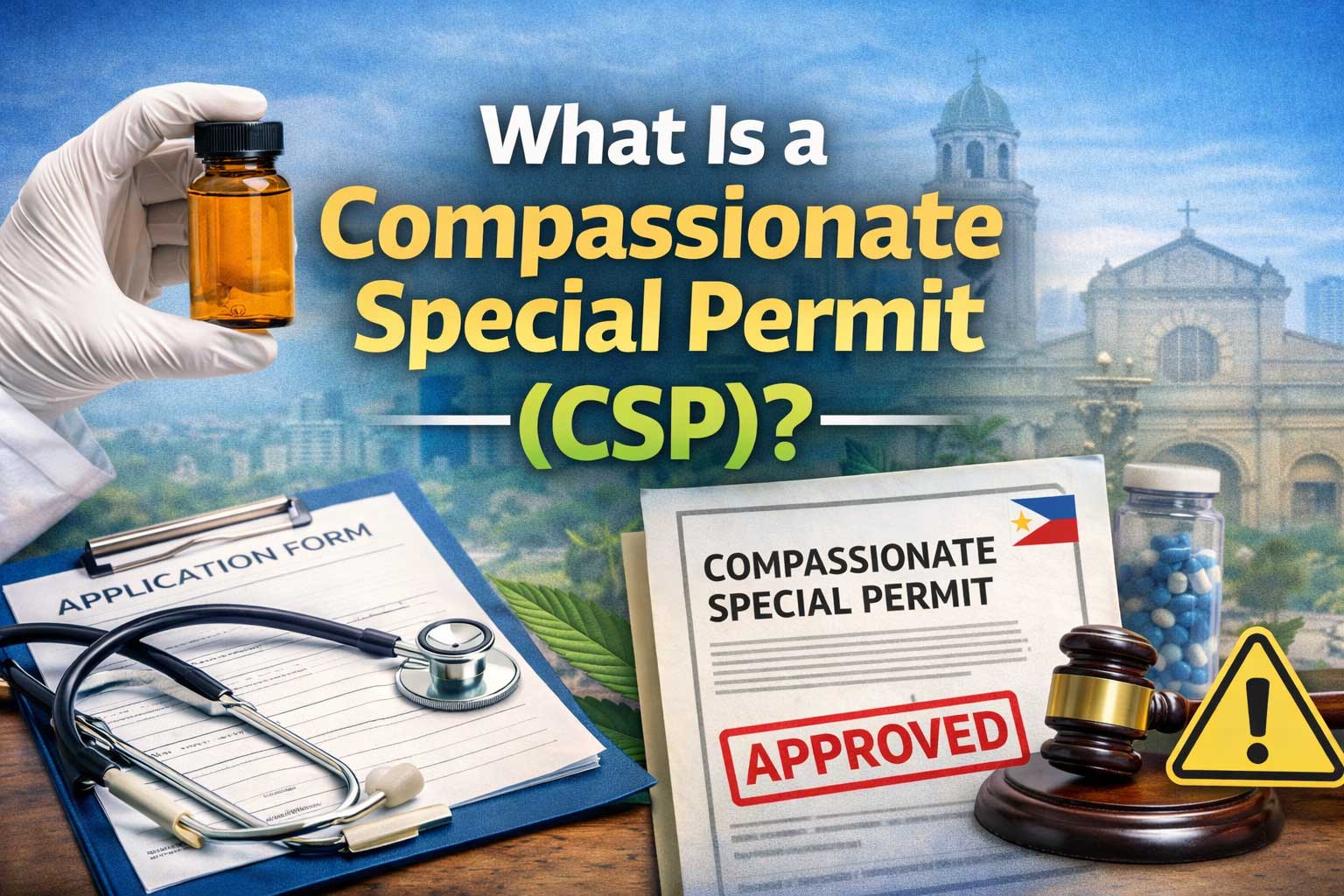
The Compassionate Special Permit (CSP)
The Compassionate Special Permit (CSP) is a mechanism administered by the Philippine FDA
that allows patient-specific access to unregistered or unauthorized drug products under controlled circumstances.
CSP approval is:
- Issued on a case-by-case basis
- Dependent on medical justification
- Not guaranteed
- Time-limited and documentation-based
CBD access under CSP is intended for exceptional medical cases, not routine consumer use.
What About Hemp Seed Oil?
Many products sold locally as “hemp oil” are actually hemp seed oil.
Hemp seed oil is extracted from seeds and typically contains no cannabinoids, including CBD.
Because hemp seed oil does not contain controlled cannabinoids, it may be sold for food or cosmetic purposes.
This does not apply to cannabinoid-rich CBD oil.
Traveling With CBD Oil to the Philippines
Bringing CBD oil into the Philippines without prior authorization may expose travelers to legal risk.
Without approved permits, CBD products may be treated as controlled substances by customs authorities.
Travelers should avoid carrying CBD products unless they have verified documentation and regulatory clearance.
Common Misconceptions
- “CBD is legal because it’s non-psychoactive” — Not necessarily under PH law
- “Hemp oil is the same as CBD oil” — Hemp seed oil usually contains no CBD
- “CBD is legal if THC is zero” — Regulatory classification still applies
Frequently Asked Questions
Can Filipinos buy CBD oil online?
Online availability does not override Philippine drug laws.
CBD products remain subject to the same restrictions regardless of sales channel.
Is CBD legal for personal use?
CBD is not recognized as a general consumer product.
Medical access may be considered only through official regulatory approval.
Where can I verify updates?
Always consult official sources such as the Philippine FDA and the Dangerous Drugs Board for the latest guidance.
Disclaimer: This article is for informational purposes only and does not constitute legal or medical advice.
Laws and regulations may change. Always consult official government sources or licensed professionals.
Last updated: January 2026


Leave A Comment